


PUMPA - SMART LEARNING
எங்கள் ஆசிரியர்களுடன் 1-ஆன்-1 ஆலோசனை நேரத்தைப் பெறுங்கள். டாப்பர் ஆவதற்கு நாங்கள் பயிற்சி அளிப்போம்
Book Free DemoPermanent Tissues:
- Permanent tissues develop from meristematic cells that lose their ability to divide and become specialised for specific functions.
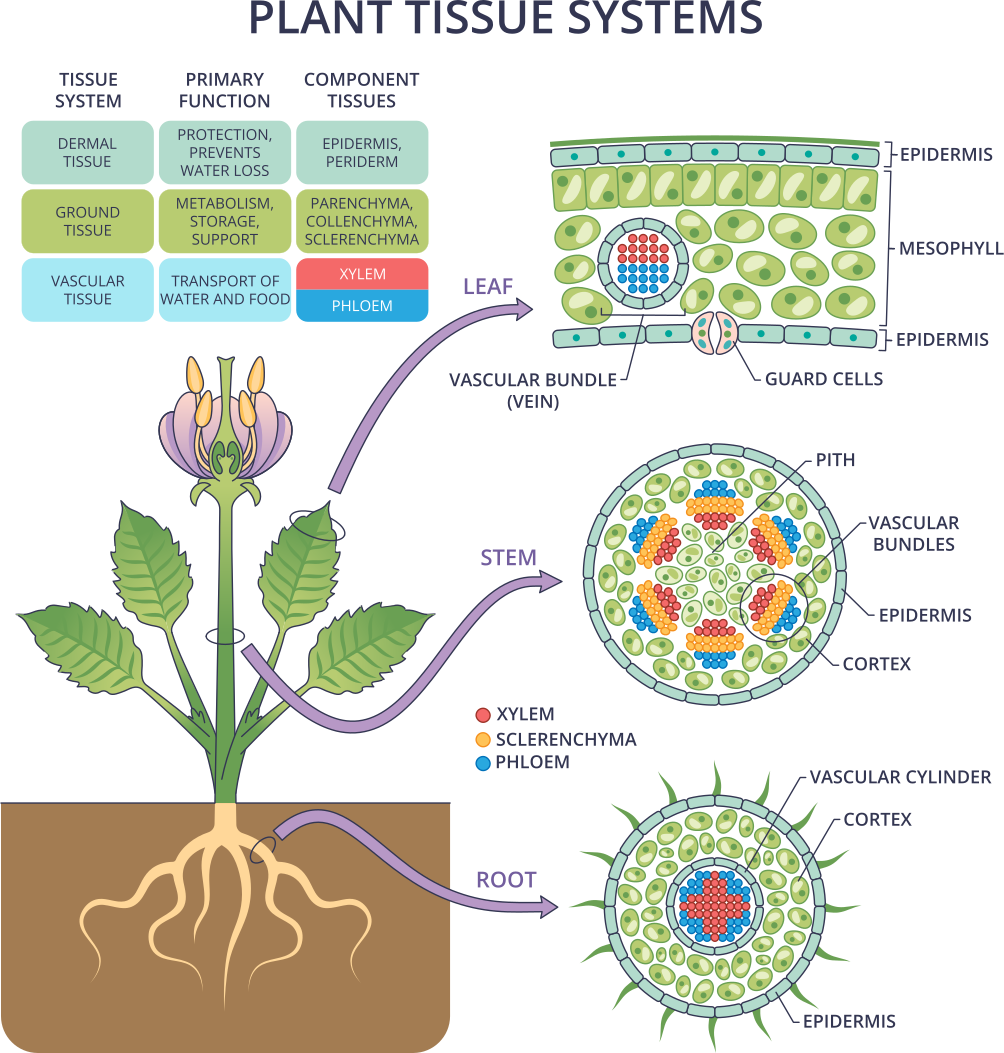
- When a transverse section (T.S.) of a stem or root, or a vertical section (V.S.) of a leaf, is observed under a microscope, different tissue types can be identified, each performing a unique role.
- Permanent tissues are classified into simple permanent tissues and complex permanent tissues.
Why Different Tissues Are Present?
Different groups of cells are present in plants to ensure division of labour. Each tissue is specialized to perform a specific function, such as protection, support, storage, photosynthesis, or transport, enabling the plant to function efficiently.
Types of Permanent Tissues:
| SNo. | Basis | Simple Permanent Tissue | Complex Permanent Tissue |
| 1. | Definition | Made up of only one type of cell | Made up of more than one type of cell working together |
| 2. | Nature of Cells | Similar cells | Different types of cells |
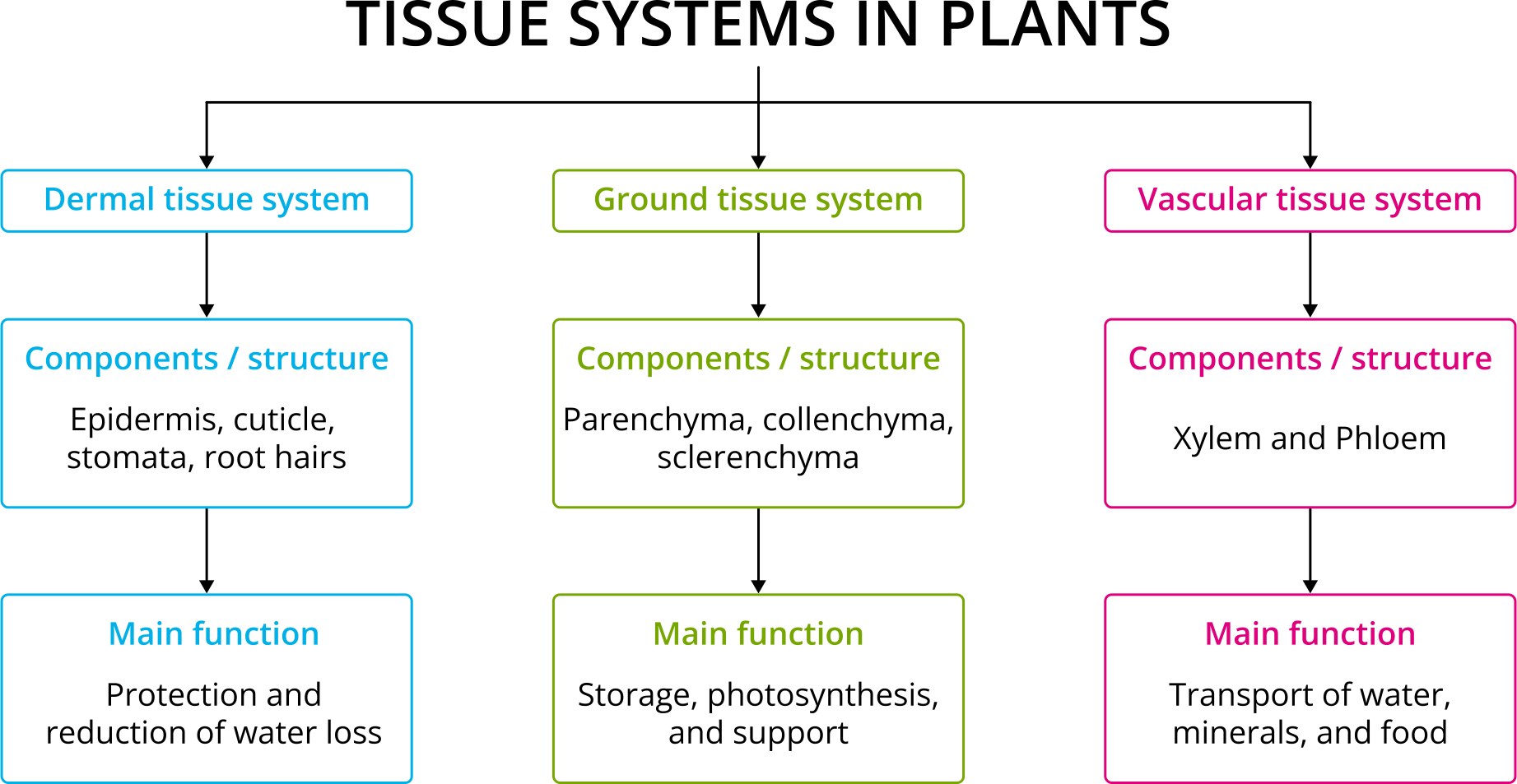
| 3. | Function | Support, storage, flexibility | Transport of water, minerals, and prepared food |
| 4. | Examples | Parenchyma, Collenchyma, Sclerenchyma | Xylem, Phloem |
| 5. | Main role | Basic functions like support and storage | Conduction and transport |
Protective Tissue – Epidermis
- The epidermis forms the outer protective layer of the plant body. It consists of a single layer of tightly packed cells.
- A waxy cuticle made of cutin covers the epidermis and helps reduce water loss.
- The epidermis also protects the plant from mechanical injury, disease-causing organisms, and harsh environmental conditions.
Functions of Epidermis
- Protects the plant from injury and infection.
- Reduces water loss.
- Helps in gaseous exchange through stomata.
- Root epidermal cells form root hairs for the absorption of water and minerals.
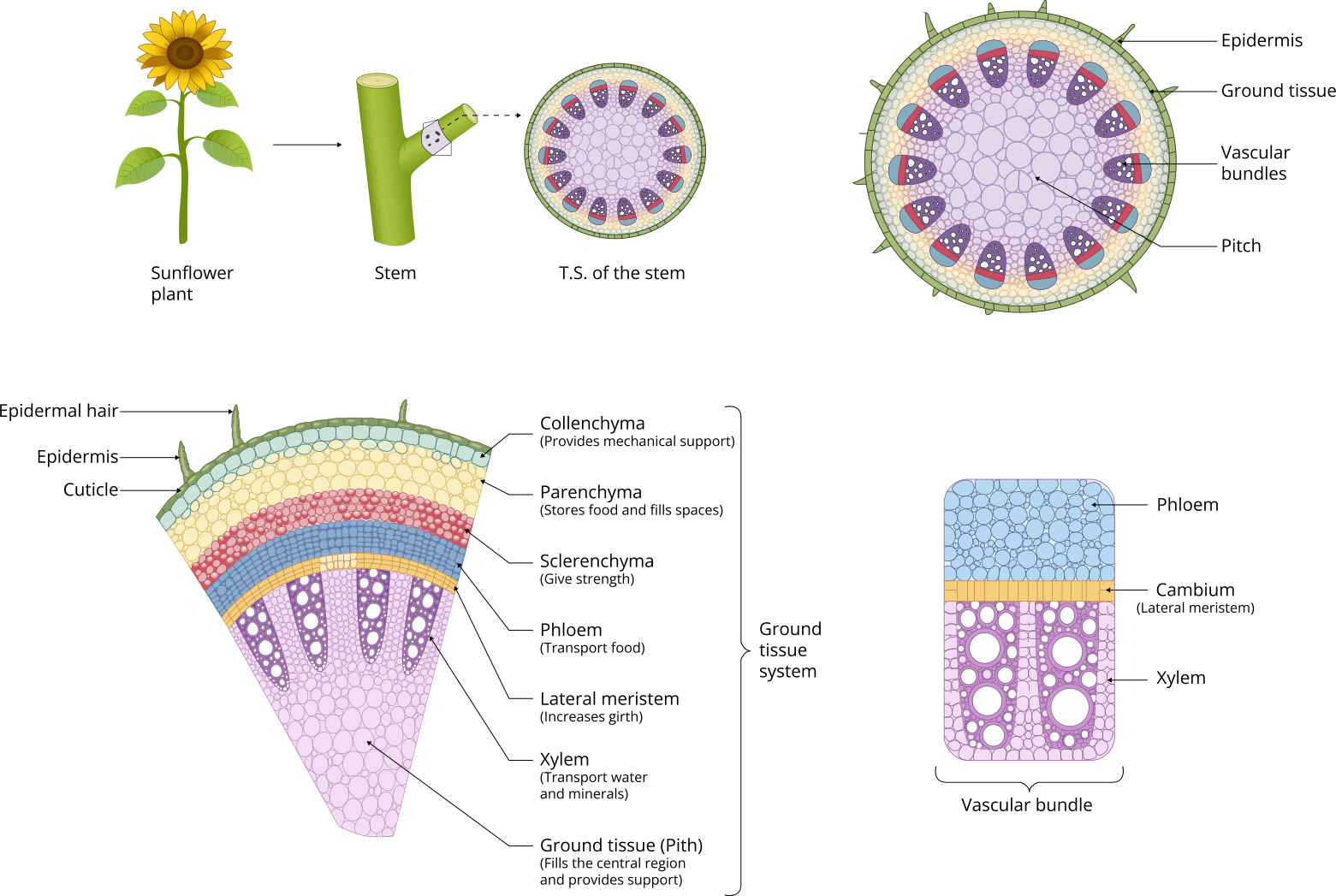
Internal Structure of a Dicot Stem (Sunflower)
Simple Permanent Tissues:
Types of Simple Permanent Tissues
- Parenchyma
- Collenchyma
- Sclerenchyma
Simple Permanent Tissues – Comparative Table
| SNo. | Features | Parenchyma | Collenchyma | Sclerenchyma |
| 1. | Cell Structure | Thin-walled living cells with intercellular spaces | Living cells with uneven thickening at the corners due to cellulose and pectin | Thick lignified walls |
| 2. | Nature of Cells | Living | Living | Dead |
| 3. | Intercellular Spaces | Present | Very less or absent | Absent |
| 4. | Main Function | Storage of food, photosynthesis (chlorenchyma), and floating in aquatic plants (aerenchyma) | Provides support and flexibility | Provides strength and rigidity |
| 5. | Special Features | Can form large air cavities called aerenchyma | Allows bending without breaking | Forms hard and woody parts |
| 6. | Location / Examples | Soft parts of plants, green leaves | Leaf stalks (petiole), young stems, tendrils | Coconut husk, nutshells, leaf veins, seed coats |
| 7. |
Structure |
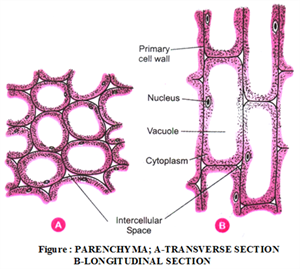 Parenchyma |
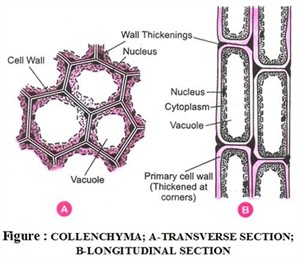 Collenchyma |
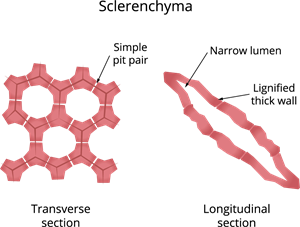 Sclerenchyma |
Complex Permanent Tissues (Conducting Tissues):
Xylem and Phloem – Comparative Table
| SNo. | Features | Xylem | Phloem |
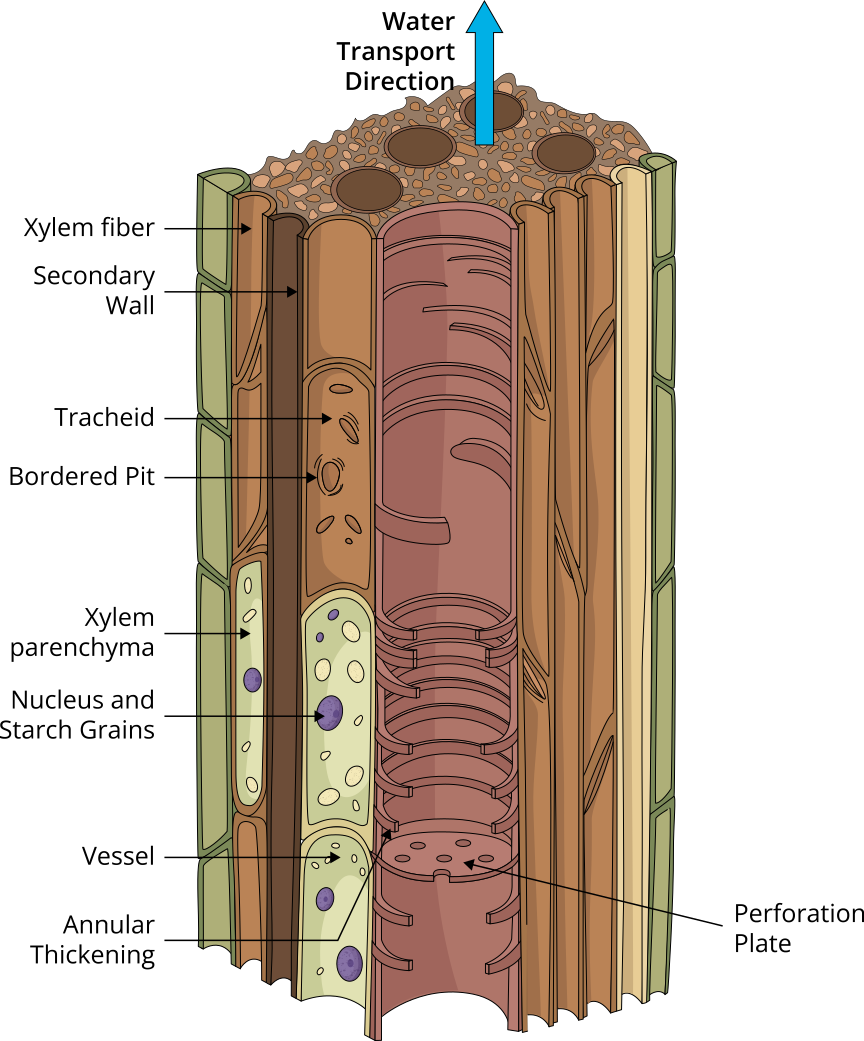
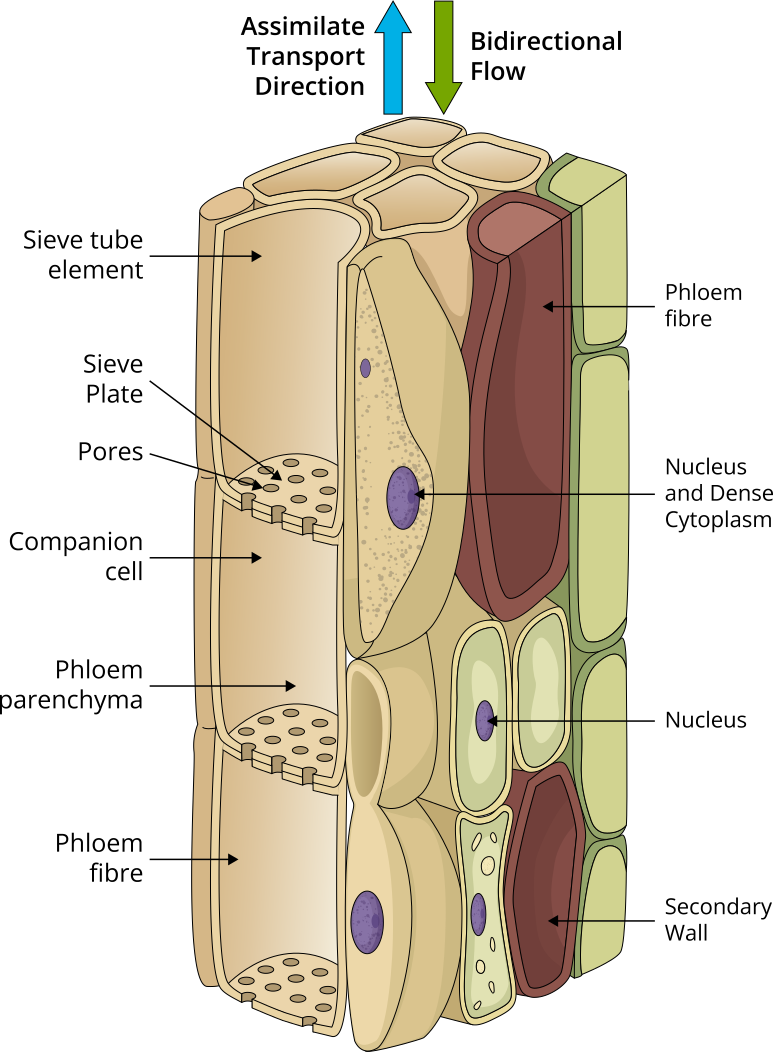
| 1. | Definition | Complex permanent tissue responsible for the transport of water and minerals | Complex permanent tissue responsible for the transport of prepared food |
| 2. | Main Function | Transports water and dissolved minerals from roots to different parts of the plant | Transports prepared food from leaves to all parts of the plant |
| 3. | Process Involved | Water conduction | Translocation of food |
| 4. | Direction of Transport | Movement mainly upward | Movement in all directions |
| 5. | Nature of Tissue | Mostly dead tissue except xylem parenchyma | Mostly living tissue except phloem fibres |
| 6. | Components | Tracheids, vessels, xylem parenchyma, xylem fibres | Sieve tubes, companion cells, phloem parenchyma, phloem fibres |
| 7. | Conducting Elements | Tracheids and vessels | Sieve tubes |
| 8. | Support Function | Provides support to the plant | Provides some support to the plant |
| 9. | Cell Walls | Thick and lignified | Thin walls except fibres |
| 10. | Living Component | Xylem parenchyma is the only living component | Sieve tubes, Companion cells and phloem parenchyma are living components |
| 11. | Special Features | Tracheids and vessels help in water conduction | Sieve tubes have perforations, and companion cells help in sugar transport |
| 12. | Position in Vascular Bundle | Usually located towards the inner side | Usually located towards the outer side |
13. |
Structure |
 Xylem |
 Phloem |
Tissue Systems in Plants:
Tissue system in plants
Plant tissue system
Sipra Guha-Mukherjee and S. C. Maheshwari
- Sipra Guha-Mukherjee collaborated with S. C. Maheshwari in the field of plant science.
- They made a breakthrough discovery in Plant Tissue Culture.
- Their research led to the development of a complete plant through anther culture.
- They used an artificial nutrient medium under controlled laboratory conditions.
- Their pioneering work greatly contributed to crop improvement.
- Their discovery helped in the development of better plant varieties.
- This research brought significant progress in modern agriculture and plant biotechnology.
 Register for free to see more content