


PUMPA - SMART LEARNING
எங்கள் ஆசிரியர்களுடன் 1-ஆன்-1 ஆலோசனை நேரத்தைப் பெறுங்கள். டாப்பர் ஆவதற்கு நாங்கள் பயிற்சி அளிப்போம்
Book Free DemoIn multicellular organisms, millions of cells work together in an organised manner. Similar cells combine to form tissues, tissues form organs, organs form organ systems, and organ systems together form an organism. This organisation helps living organisms perform different life processes efficiently.
Tissue:
A tissue is a group of similar cells that work together to perform a specific function.
Examples:
- Muscle tissue helps in movement.
- Nervous tissue carries messages.
- Xylem transports water in plants.
Hierarchy of Organisation:
The organisation in multicellular organisms follows a definite pattern:
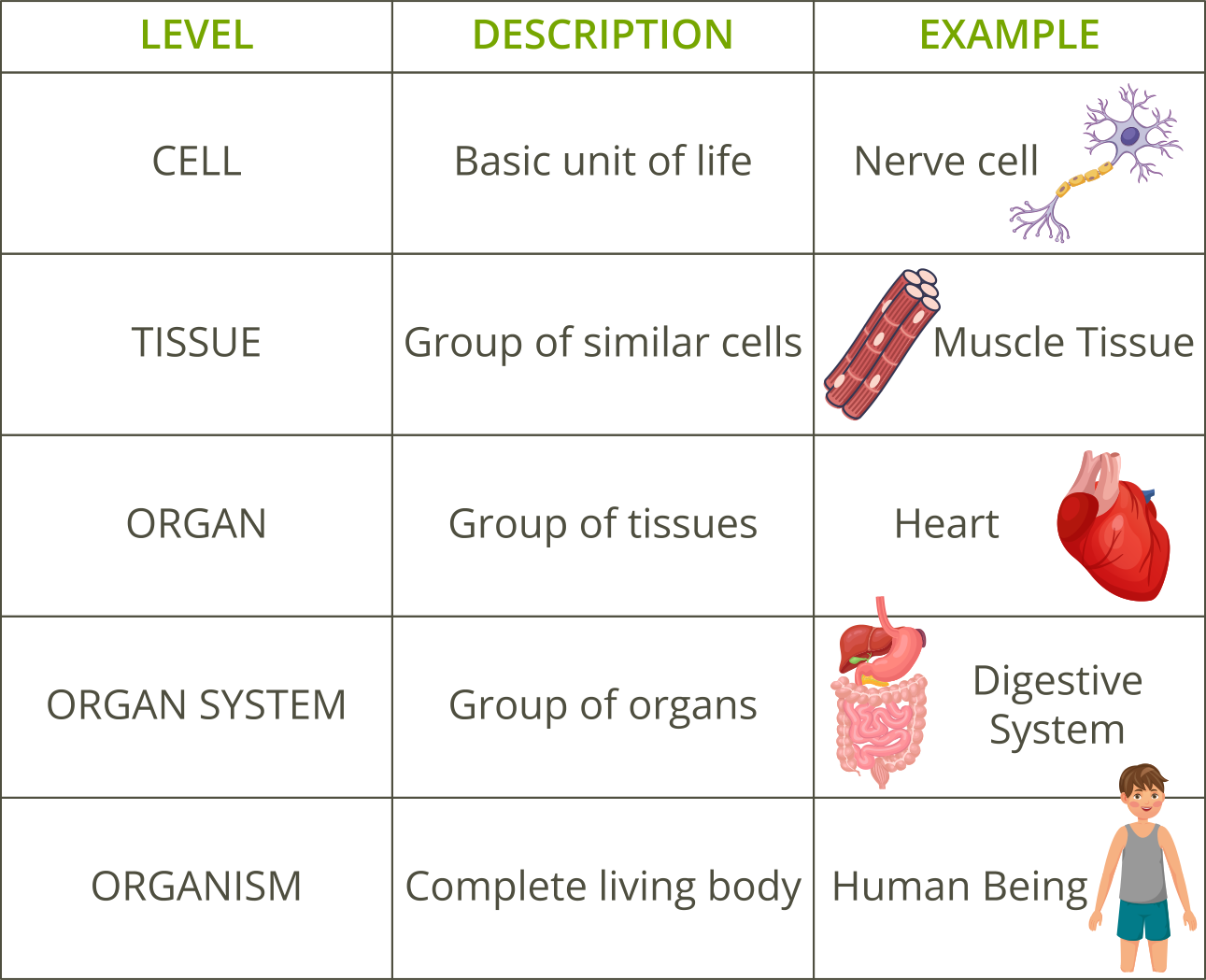
Levels of Biological Organization
Importance of Tissues:
- Brings about division of labour
- Increases the efficiency of body functions
- Helps organisms perform complex activities
- Allows cells to become specialised for different functions
Difference Between Plant and Animal Tissues:
Plants and animals have different lifestyles and therefore possess different kinds of tissues.
| S.No. | Basis of Difference | Plant Tissues | Animal Tissues |
| 1. | Position | Plants remain fixed in one place. | Animals move from place to place. |
| 2. | Main Requirement | Need support and rigidity. | Need movement and coordination. |
| 3. | Main Function | Provide support and transport. | Help in movement and coordination. |
| 4. | Cell Wall | Cell walls are present. | Cell walls are absent. |
| 5. | Growth Pattern | Growth occurs only at certain regions. | Growth occurs throughout the body. |
| 6. | Nature of Tissues | Dead tissues are more common. | Mostly living tissues are present. |
| 7. | Energy Requirement | Require less energy. | Require more energy. |
| 8. | Flexibility | Less flexible due to rigid cell wall. | More flexible due to absence of cell wall. |
B.G.L. Swamy — Renowned Indian Botanist
B. G. L. Swamy was a famous Indian botanist known for his work in plant anatomy and morphology.
Contributions:
- Studied plant structure and development
- Popularised botany through writings
- Created awareness about plant conservation
Famous Book
Hasuru Honnu
A Kannada book that combines:
- Science
- Nature
- Culture
- Botanical exploration
Achievement:
Received the Kendra Sahitya Akademi Award in 1978.
Types of Plant tissues:
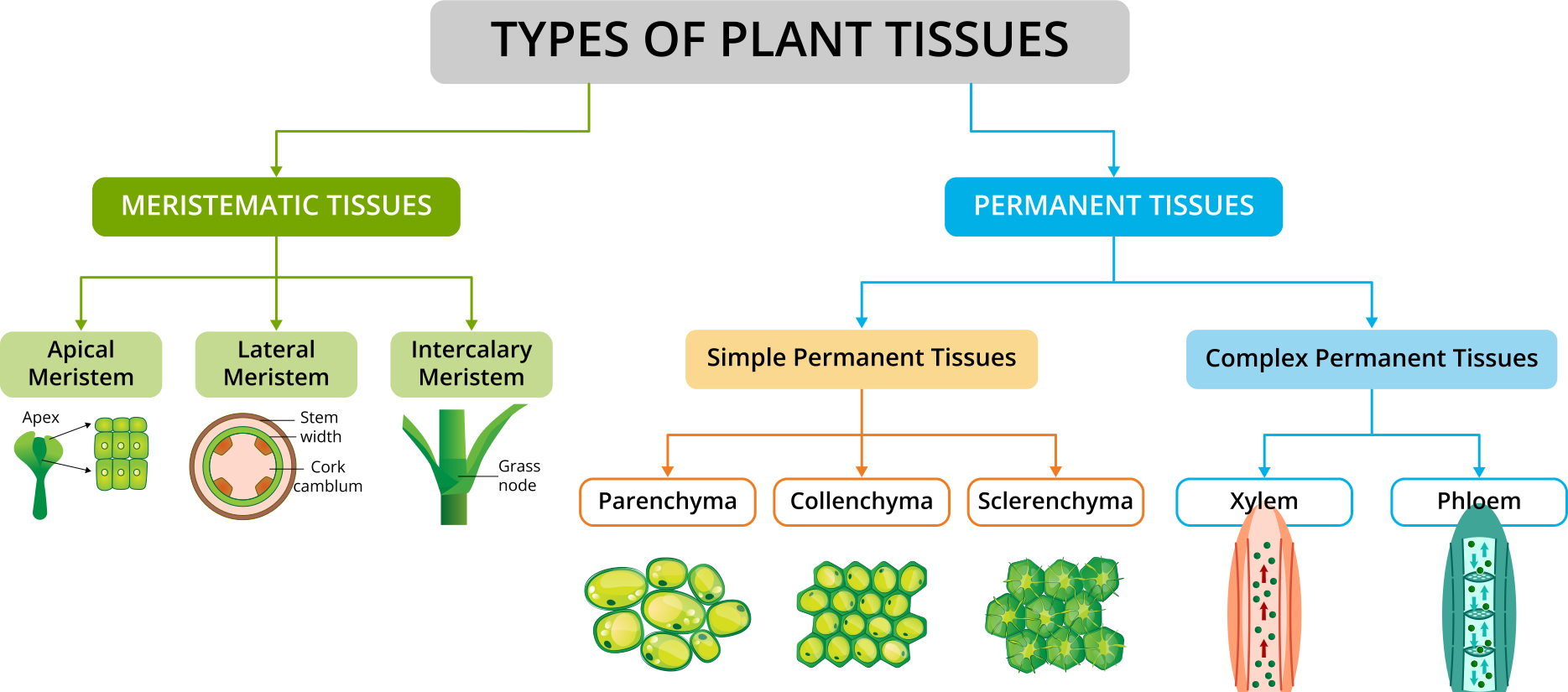
Types of Plant tissues
Tissues for Growth in Plants:
Plants show continuous growth throughout their life. Different parts of a plant grow in different ways.
You may observe that:
- A small seedling grows into a tall tree.
- Roots grow deeper into the soil.
- Stems become thicker with time.
- Grass grows again after grazing or mowing.
These changes occur due to the presence of actively dividing cells called meristematic tissues.
Growth in Plants Occurs in Three Ways:
| Type of Growth | Description | Tissue Responsible |
| Increase in Length | Growth in height of the stem and depth of roots | Apical meristem |
| Increase in Girth | Increase in thickness of the stem |
Lateral meristem
|
| Regrowth After Cutting | Growth after grazing or cutting | Intercalary meristem |
Types of Meristematic Tissue:
| Basis of Comparison | Apical Meristem | Lateral Meristem | Intercalary Meristem |
| Definition | Present at the tips of roots and shoots; responsible for increase in length | Present along the sides of stems and roots; responsible for increase in girth | Present at the base of internodes or above nodes; responsible for regrowth after cutting |
| Location | Root tips and shoot tips | Along the circumference of stems and roots | Base of internodes or near nodes |
|
Type of Growth
|
Primary growth | Secondary growth | Regrowth and elongation |
| Main Function | Increases the length of plant | Increases thickness or girth | Helps plants regenerate after cutting or grazing |
| Growth Caused | Increase in the height of the stem and the depth of the roots | Increase in the diameter of the stem and root | Rapid regrowth of leaves and branches |
| Direction of Growth | Upward and downward growth | Sideward growth | Growth between mature tissues |
|
Cell Division
|
Cells divide continuously at the tips | Cells divide in concentric layers | Cells divide rapidly at nodes and internodes |
| Cellular Characteristics | Small, thin-walled, tightly packed cells with dense cytoplasm and a large nucleus | Small, thin-walled, tightly packed cells with dense cytoplasm and a large nucleus | Small, thin-walled, tightly packed cells with dense cytoplasm and a large nucleus |
| Vacuoles | Vacuoles are absent or very small | Vacuoles are absent or very small | Vacuoles are absent or very small |
|
Intercellular Space
|
Little or no intercellular space | Little or no intercellular space | Little or no intercellular space |
| Found In | Growing root and shoot tips | Mainly dicot stems and roots |
Grasses and garden hedges
|
| Importance | Helps roots grow deeper, and shoots grow taller | Makes stems thicker and stronger | Helps plants recover after mowing or grazing |
| Example | Growth of the onion root tip | Increase in the thickness of the tree trunk | Regrowth of grass after mowing |
|
Special Feature
|
Responsible for the primary increase in plant length | Produces annual growth rings | Produces new branches after cutting |
| Experimental Observation | Onion root tips stop growing when cut | Annual rings help determine age of tree | Grass grows again after grazing |
|
Differentiation
(Differentiation is the process by which cells derived from meristematic tissue lose their ability to divide and become specialised to perform specific functions, forming permanent tissues).
|
Cells later form permanent tissues | Cells form permanent secondary tissues | Cells mature into node and internode tissues |
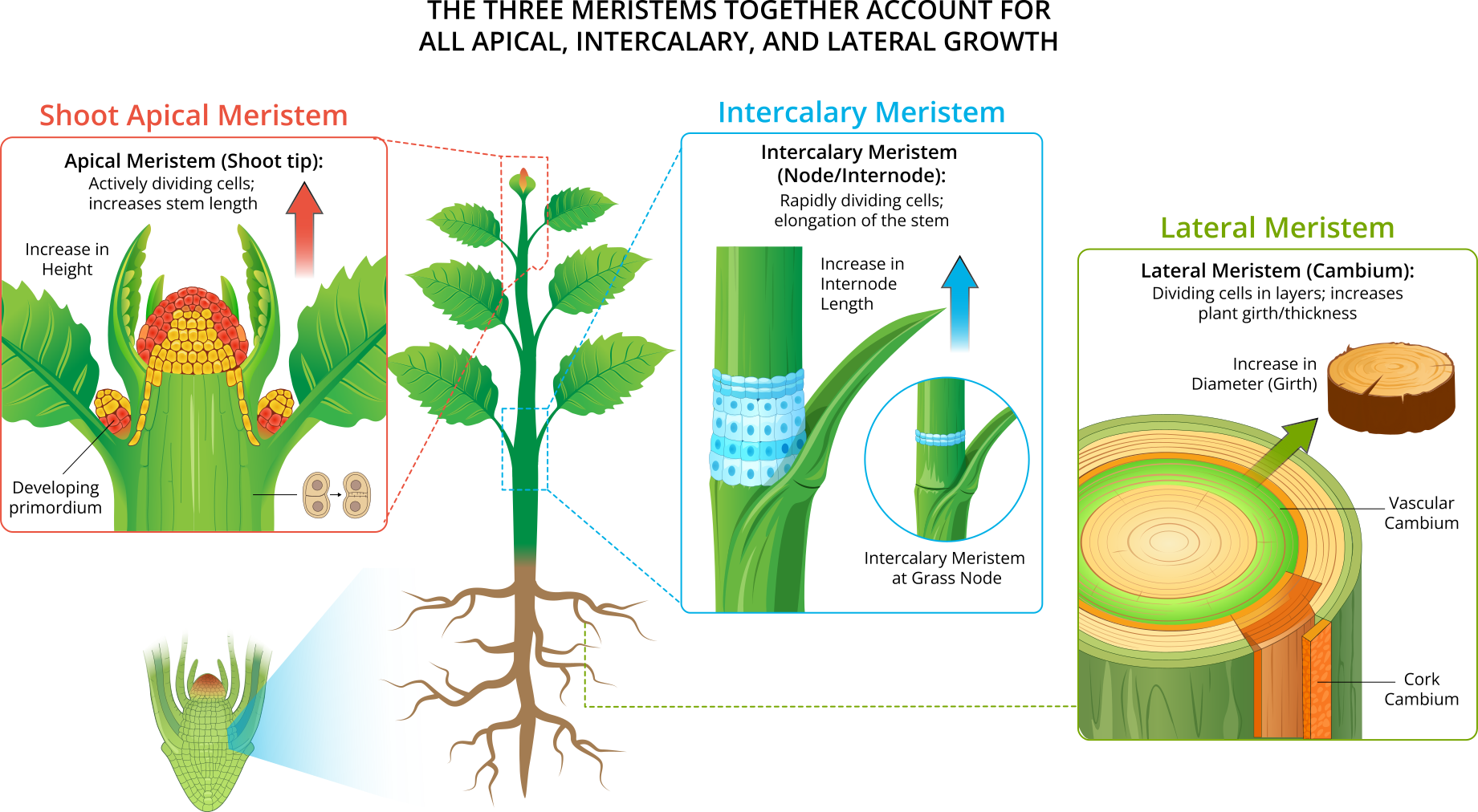
Types of Meristematic Tissue
 Register for free to see more content